Remote Code Execution in OpenSSL TLS Handshake Parser
A heap buffer overflow vulnerability in OpenSSL versions 3.2.0-3.2.1 and 1.1.1w allows remote attackers to execute arbitrary code via specially crafted TLS handshake messages that trigger memory corruption in the certificate parsing routine.
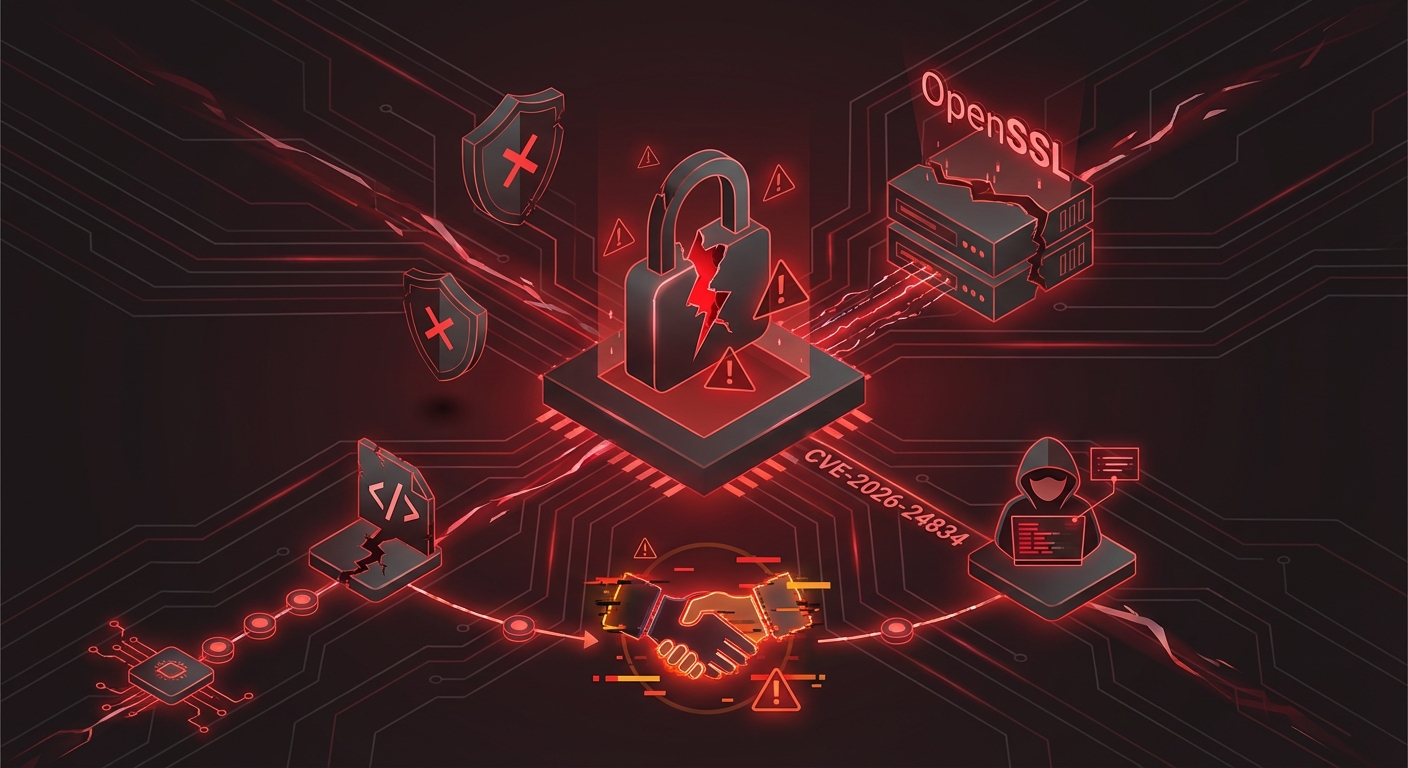
This section explains the vulnerability in everyday language, so anyone can understand the risk and impact.
A serious security flaw was found in OpenSSL, which is software that helps secure internet connections. The bug allows attackers to potentially take control of servers and devices running vulnerable versions of OpenSSL by sending specially crafted malicious network traffic.
This is particularly dangerous because OpenSSL is used by millions of websites and devices to encrypt sensitive data. When a device using a vulnerable version tries to establish a secure connection, an attacker could exploit this flaw to crash the system or potentially gain complete control over it.
This vulnerability affects both newer (3.2.x) and older (1.1.1) versions of OpenSSL that many organizations rely on for security.
Affected Products
Remediation
Update to OpenSSL version 3.2.2 or 1.1.1x depending on your current version branch. If immediate updating is not possible, implement network-level filtering to restrict TLS connections to trusted sources and monitor for exploitation attempts. Consider implementing application-level certificate validation as an additional control.
Sources & References
- nvdNVD
- vendorOpenSSL Security Advisory